

The Real Reasons Small Businesses Fail Online (And How to Fix Them)
The digital world is bursting with opportunity.
But it’s also a minefield for small businesses.
A shocking 90% of online businesses fail within their first four months. This isn’t bad luck. It’s a pattern of preventable mistakes.
Many blame “running out of cash,” but that’s just the final symptom.
The real illness? A lack of a clear digital marketing strategy and terrible online visibility.
This guide dissects the core reasons why small businesses fail online. More importantly, it gives you the strategic fix—a complete blueprint to build a resilient, profitable, and successful online presence.
Let’s dive in.
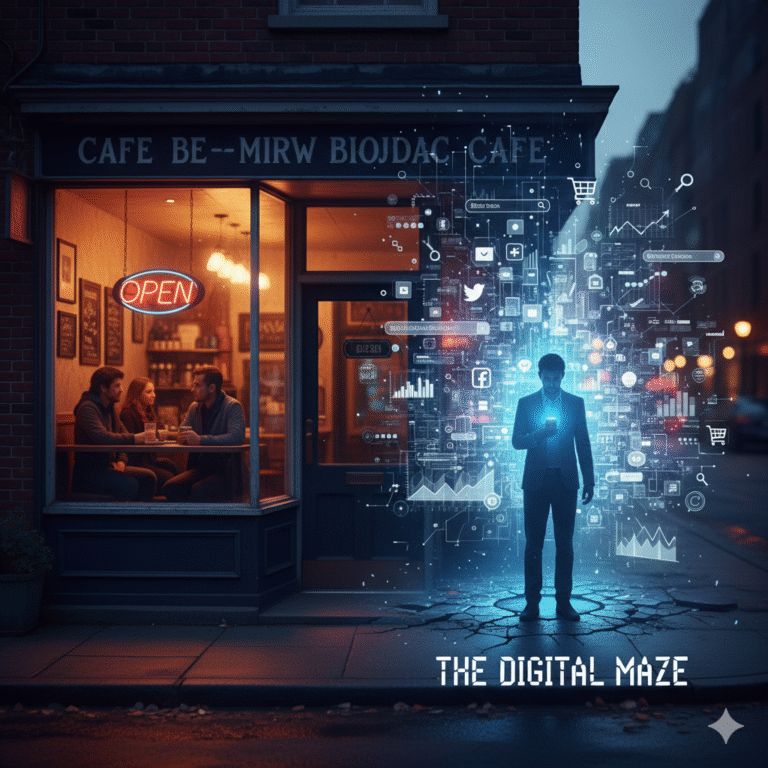
The Core Reasons for Online Business Failure
An online business rarely fails from a single blow. It’s a cascade of interconnected issues.
It all starts with misunderstanding the digital world.
Here are the most common causes of failure.
The Visibility Void: Poor Online Marketing and SEO Neglect
This is the big one.
The top two reasons for online failure are poor online marketing (37%) and a lack of search visibility (35%).
Many entrepreneurs believe a great product sells itself. This is a fatal error.
Especially when 81% of shoppers research online before buying.
Undefined Audience: Marketing to everyone means you
connect with no one. Without a clear customer in mind, your efforts are
unfocused, your engagement is low, and your return on investment is dismal.
Inconsistent Branding: Are your logos, colors, and
tone of voice a mess across different platforms? This confusion weakens your
brand and pushes potential customers away.
Neglecting SEO: Failing to invest in Search Engine
Optimization (SEO) makes you invisible. This is critical for Local SEO,
as 46% of all Google searches are for local information. If customers can’t
find you, you don’t exist.
The Experience Gap: How a Bad Website Drives Customers
Away
Your website is your digital storefront.
A professional website makes you credible. In fact, 84% of
consumers agree. Yet, 28% of small businesses still don’t have one.
And for those that do, a bad user experience (UX) is worse
than no website at all.
Not Being Mobile-Friendly: Over 75% of web traffic
comes from mobile. If your site is clunky on a phone, you’re failing the vast
majority of your visitors. A staggering 57% of users won’t recommend a business
with a poor mobile site. You can check your site with Google’s
Mobile-Friendly Test.
Slow Loading Speeds: A one-second delay in load time
can make a user over 100% more likely to leave. Slow speeds kill sales and hurt
your search rankings.
Poor Navigation and Design: First impressions matter.
38% of visitors will leave a website if the layout is ugly. A confusing
checkout process is a top reason for the nearly 70% average cart abandonment
rate.
The Financial Drain: Unsustainable Customer Acquisition
Costs
“Running out of cash” is what 32% of failed
businesses report.
But it’s the predictable outcome of a broken strategy.
When your marketing is untargeted, the cost to acquire a
single customer (CAC) skyrockets. If it costs more to get a customer than you
earn from them, your business is on a countdown to zero.
This is a cash-burning cycle. You spend money on ads, which
send people to a bad website, which repels them.
The Strategic Misstep: No Market, No Plan, No Chance
Some businesses are doomed from the start.
These are foundational errors that no amount of marketing
can fix.
No Market Need: A painful 35% of businesses fail
because there’s simply “little to no market” for what they sell. This
is a failure of research, not marketing.
Ignoring Competition: The online world is crowded.
You must answer one question: “Why should a customer choose me?”
Without a Unique Selling Proposition (USP), you’re just another generic option.
Inadequate Planning: A business without a formal plan
is running on hope. This leads to a lack of funding, no long-term vision, and
inevitable failure.
Your Digital Marketing Blueprint to Avoid Online Business Failure
Now you know the traps.
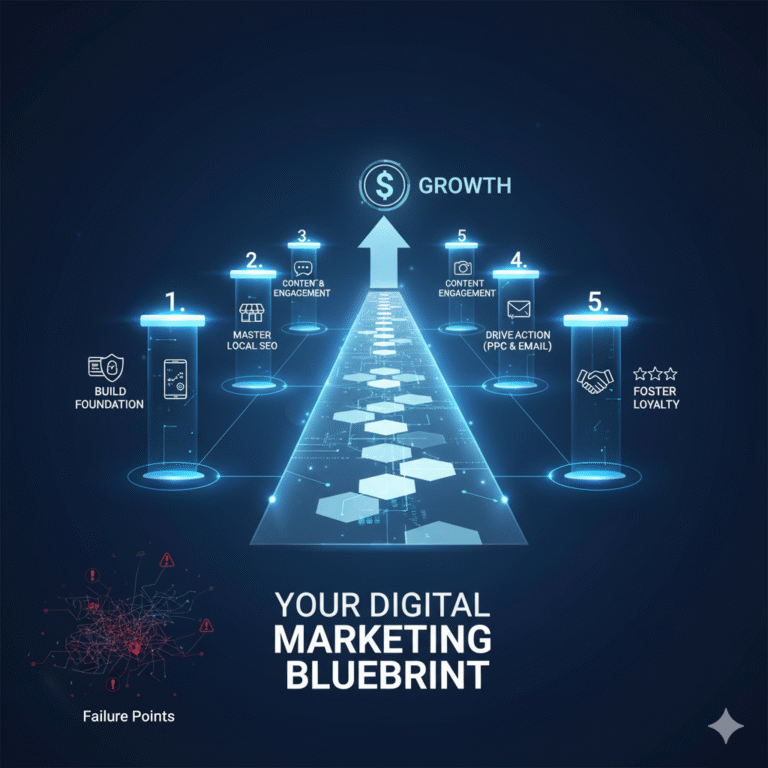
Here is your actionable blueprint to build a business that thrives online.
Step 1: Build a Solid Digital Foundation
Before you spend a dime on ads, get your house in order.
Relying only on a social media page is a huge mistake. You need a professional website that you own and control.
Your Website Must-Haves:
- Mobile-Friendly: Your site must look and work perfectly on all devices.
- Fast: Aim for a load time under 3 seconds. Test it with a tool like Google’s PageSpeed Insights.
- Secure: HTTPS is non-negotiable. It protects customer data and builds essential trust.
Define Your Strategy:
- Target Audience: Create detailed buyer personas. Know exactly who you are talking to.
- Unique Selling Proposition (USP): In one sentence, state what makes you different and better than everyone else.
Step 2: Master Local SEO to Dominate Local Search
For most small businesses, Local SEO offers the best return on investment. Period.
It drives consistent, high-intent traffic directly to you.
Optimize Your Google Business Profile (GBP): This free tool is your #1 asset for local visibility. Claim and completely fill out your profile at google.com/business.
Ensure NAP Consistency: Your Name, Address, and Phone number (NAP) must be 100% identical everywhere it appears online.
Build Local Citations and Backlinks: Get listed in reputable local directories like Yelp and your local Chamber of Commerce. This tells search engines you’re a legitimate local business.
Step 3: Create Connections with a Content Marketing Plan
Content marketing builds trust.
It positions you as a credible expert and provides real value to your audience.
Your Content Strategy Checklist:
- Set Clear Goals: What do you want to achieve? Brand awareness? Lead generation? Define your Key Performance Indicators (KPIs) to track success.
- Align Content to the Sales Funnel: Create content for every stage. Use blog posts for awareness, case studies for consideration, and testimonials for decision-making.
- Choose Your Platforms Wisely: Don’t be everywhere. Focus on the one or two social media platforms where your ideal customers are most active.
- Engage, Don’t Just Broadcast: Social media is a two-way street. Ask questions. Respond to comments. Build a community.
Step 4: Drive Immediate Action with PPC and Email Marketing
SEO is a long game. PPC and email drive results now.
PPC Advertising: Pay-Per-Click ads on platforms like Google Ads let you buy targeted traffic. A winning campaign needs clear goals, the right keywords, and a landing page that converts.
Email Marketing: Email still delivers one of the highest ROIs in digital marketing.
- Build Your List: Offer something valuable—a discount, a guide—in exchange for an email address.
- Automate Key Campaigns: Set up a “Welcome Series” for new subscribers and an “Abandoned Cart Series” to bring back lost sales. Explore options with platforms like Mailchimp.
Step 5: Foster Loyalty Through Reputation Management
Online reviews are the new word-of-mouth.
A massive 98% of consumers read online reviews for local businesses. You cannot ignore them.
Actively Request Reviews: Don’t be shy. Ask your happy customers to leave a review on Google, Yelp, or your industry’s key platform.
Respond to Every Review: Thank people for positive feedback. More importantly, respond publicly and professionally to negative reviews. This shows you care and can turn a bad situation around.
Future-Proofing Your Small Business: Emerging Digital Marketing Trends
Mastering the basics is crucial. Staying ahead requires looking forward.
Leveraging AI in Digital Marketing for Small Business
Artificial intelligence (AI) is no longer just for big corporations.
AI for Content Creation: Use AI tools to brainstorm blog topics, generate outlines, or write first drafts of social media posts.
AI for Customer Service: AI-powered chatbots can offer 24/7 support on your website, answering common questions and freeing up your time.
The Rise of Video and Local Influencer Marketing
Attention is shifting to more dynamic and authentic content.
Short-Form Video: Platforms like TikTok and Instagram Reels are powerhouse marketing tools. Use them to share behind-the-scenes content, quick tips, and customer stories.
Local Influencer Marketing: Partnering with local micro-influencers (those with 10k-100k followers) is a cost-effective way to reach an engaged audience. Their endorsement often feels more trustworthy than a traditional ad.
Conclusion: An Actionable Plan for Your Small Business
The high rate of the average small business fail is not your destiny.
It’s the direct result of preventable marketing mistakes.
When you treat your online presence as a core part of your business, you build a foundation for powerful, sustainable growth.
Your 90-Day Digital Marketing Checklist
Ready to take control? Here’s your action plan.
- Foundation (Weeks 1-2): Claim and completely optimize your Google Business Profile. This is your single most important first step.
- Website (Weeks 3-4): Use Google’s PageSpeed Insights and Mobile-Friendly Test tools to diagnose your site. Fix the most critical issues immediately.
- Audience (Weeks 5-6): Write down a clear description of your ideal customer and your Unique Selling Proposition (USP). Tape it to your wall.
- Content (Weeks 7-10): Choose ONE social media platform. Create a simple content calendar and post valuable content 3-4 times per week.
- Engagement (Weeks 11-12): Create a simple system to ask every happy customer for a review. Make it a daily habit to respond to every single one.
Follow this plan. You can turn your online presence from a liability into your most powerful engine for growth.